TRADE LIFE CYCLE (TLC) IN OTC AND EXCHANGE

The trade life cycle in the Over-the-Counter (OTC) market refers to the various stages involved in the processing and settlement of trades that occur directly between parties, outside of organized exchanges. Here are the key steps in the OTC trade life cycle:

  1. Trade Initiation: The trade life cycle begins with the initiation of a trade. Parties involved, such as institutional investors, hedge funds, or banks, negotiate the terms of the trade, including the quantity, price, and settlement date. This negotiation is typically facilitated through electronic trading platforms or over-the-phone communication.
  2. Trade Execution: Once the trade is validated, it moves to the execution phase, where the actual settlement and movement of funds or securities take place. The execution process may involve several intermediaries, such as custodians, brokers, or central counterparties, depending on the specific trade and market requirements.
  3. Trade Capture: Once the trade terms are agreed upon, the details are captured and documented by both parties involved in the trade. This includes recording the trade information, such as the security, quantity, price, and counterparties involved. Trade capture may occur through electronic trade confirmation platforms or through manual entry into trade processing systems.
  4. Trade enrichment: Adding economic details to the trade. Economic details- commission charges,taxes etc non-economic details – bank account and custodian account
  5. Trade Validation: Following the trade confirmation, the counterparties or their respective middle offices perform trade validation to ensure that the trade conforms to various compliance checks, risk limits, and internal policies. This step involves verifying counterparty information, regulatory requirements, trade eligibility, and other checks necessary for risk management.
  6. Trade verification: Here trade is compared with the trade sheet (email/Excel file sent from front office of middle office) just to make shure that details are entered and booked are correct.
  7. Trade Confirmation: After capturing the trade details, both counterparties exchange trade confirmations to validate and confirm the agreed-upon terms. Trade confirmations typically include essential information, such as the trade ID, settlement date, pricing, and any additional conditions. It is crucial to ensure the accuracy of trade confirmations to avoid discrepancies.
  8. Trade Settlement: Once the trade confirmations are matched, the settlement process begins. Settlement involves the transfer of funds, securities, or other financial instruments between the counterparties, according to the agreed-upon terms. Settlement may occur through various methods, such as book-entry transfers, delivery versus payment (DVP), or payment versus payment (PVP), depending on the market and asset type.
  9. Trade Reconciliation: After the settlement, trade reconciliation takes place to verify that the actual settlement matches the expected outcome. This step involves comparing trade data, financial records, and positions to identify and resolve any discrepancies or errors that may have occurred during the trade life cycle.
  10. Trade Reporting: Finally, trade reporting is conducted to fulfill regulatory requirements and provide transparency in the market. Both counterparties are responsible for reporting trade details to the relevant regulatory authorities or trade repositories, as mandated by the applicable regulations.

It’s important to note that the trade life cycle may vary depending on the market, asset class, and specific regulatory requirements governing OTC trading in different jurisdictions.


Exchange Trade Life Cycle
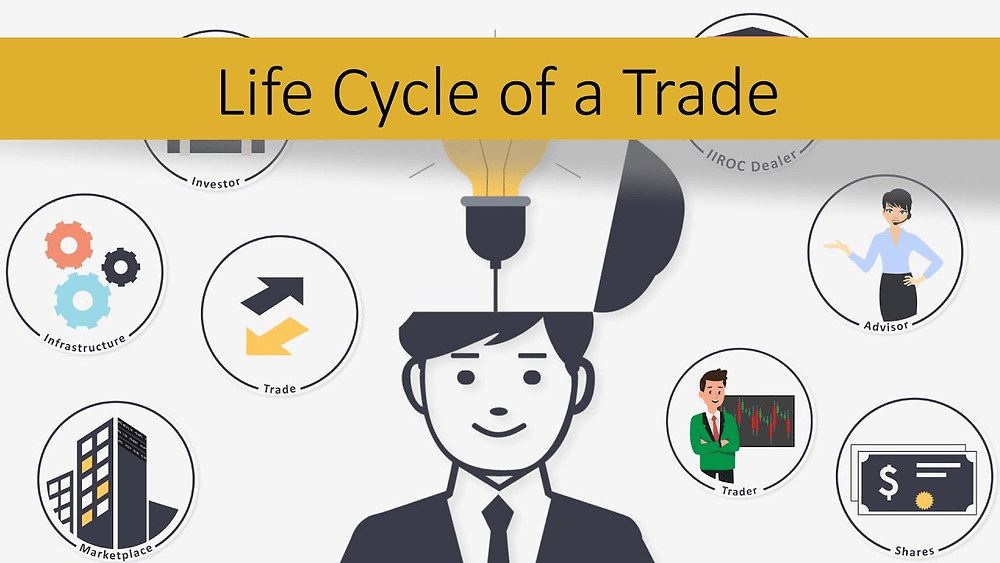
The exchange trade life cycle refers to the series of steps involved in the process of executing and settling a trade on an exchange. Here’s an example exchange trade life cycle:

  1. Order Placement: The trade cycle begins when an investor or trader places an order to buy or sell a financial instrument, such as stocks, bonds, or derivatives, through a trading platform connected to the exchange.
  2. Order Routing: Once the order is placed, it is routed to the exchange where the financial instrument is listed. The order routing process involves transmitting the order electronically to the appropriate exchange.
  3. Order Matching: At the exchange, the order is matched with a corresponding counterparty. If a buy order matches with a sell order, and both parties agree on the price, quantity, and other relevant details, the trade is executed.
  4. Trade Execution: Once the order is matched, the trade is considered executed. The exchange generates a trade confirmation that includes information such as the trade price, quantity, trade date, and time. This confirmation is sent to both parties involved in the trade.
  5. Trade Reporting: The exchange reports the executed trade to relevant market participants, regulatory bodies, and market data providers. This helps maintain transparency and facilitates price discovery in the market.
  6. Trade Clearing: After the trade is executed, it goes through the clearing process. Clearing involves verifying the trade details, reconciling the positions of the buyer and seller, and calculating the obligations for settlement.
  7. Trade Settlement: In this stage, the buyer delivers the funds and the seller delivers the securities to complete the transaction. Settlement may involve the transfer of funds, securities, or both, depending on the financial instrument being traded. Settlement can occur on the same day (known as T+0) or may take a few days (T+1, T+2, etc.) depending on the market and the instrument.
  8. Trade Confirmation: Once the trade settlement is completed, the exchange sends a trade confirmation to both parties involved in the trade. The confirmation provides details of the settlement, including the settlement date, amount settled, and any relevant fees or charges.
  9. Post-Trade Processing: After settlement, various post-trade activities take place, including reconciliation of trades, margin calculations, risk management, and updating of account balances and positions.

It’s important to note that the trade life cycle can vary depending on the specific exchange, financial instrument, and market regulations. The example above provides a general overview of the exchange trade life cycle, but the specific details and steps may differ in practice.
INTERNATIONAL SWAPS AND DERIVATIVES ASSOCIATION

ISDA stands for the International Swaps and Derivatives Association. It is a trade organization that represents participants in the global derivatives market. The organization was formed in 1985 and has since played a significant role in shaping and standardizing the over-the-counter (OTC) derivatives market.

The primary purpose of ISDA is to promote safe and efficient derivatives markets. It achieves this by providing a platform for market participants, including banks, financial institutions, asset managers, corporations, and other entities, to collaborate on issues related to derivatives trading and risk management.

ISDA is best known for developing and publishing standardized documentation for derivatives transactions, known as ISDA Master Agreements. These agreements provide a comprehensive framework for negotiating and executing OTC derivative transactions between two parties. The master agreements include standardized terms and definitions, such as payment obligations, events of default, termination provisions, and dispute resolution mechanisms.

By using these standardized agreements, market participants can reduce legal and operational risks, enhance transparency, and increase market liquidity. ISDA also publishes various other documents and guidelines, such as collateral agreements, credit support annexes, and valuation protocols, which help streamline derivatives trading and improve market efficiency.

Moreover, ISDA plays an essential role in advocating for the interests of its members and the derivatives industry as a whole. It engages with regulators, policymakers, and other industry stakeholders to provide input on regulations, market practices, and risk management standards. Through its committees and working groups, ISDA addresses key issues such as regulatory reform, market infrastructure, and technology advancements impacting the derivatives market.

The ISDA Master Agreement typically consists of several sections and annexes, including:

1:Master Agreement: This section outlines the general terms and conditions that govern the relationship between the parties. It includes definitions, representations, and warranties, events of default, and termination provisions.

2:Schedule: The Schedule contains specific provisions tailored to the individual transaction or relationship between the parties. It includes details such as the type of transactions, eligible currencies, payment and delivery terms, and credit support arrangements.

3:Credit Support Annex (CSA): The CSA sets out the terms for collateralization and provides mechanisms for managing credit risk. It specifies the types of collateral that can be posted, the valuation methodology, and the frequency of collateral transfers.

4:Confirmation: A Confirmation is a separate document that confirms the economic and transaction-specific details of a particular trade, such as the notional amount, trade date, maturity, and applicable interest rates or other pricing terms.

5:Definitions: The Definitions section provides standardized terms and definitions for common derivatives products. It ensures consistency and clarity in the interpretation of terms used in the Master Agreement and Confirmations.

6:Other annexes: Depending on the specific needs of the parties or the complexity of the transactions, additional annexes may be included. These can cover various topics, such as additional termination events, tax provisions, or jurisdiction-specific provisions.

It’s important to note that the ISDA Master Agreement is a widely used document, but parties can negotiate and customize its terms to some extent. The agreement provides a comprehensive framework for the relationship and helps mitigate legal and operational risks in OTC derivatives transactions.

What are derivatives?


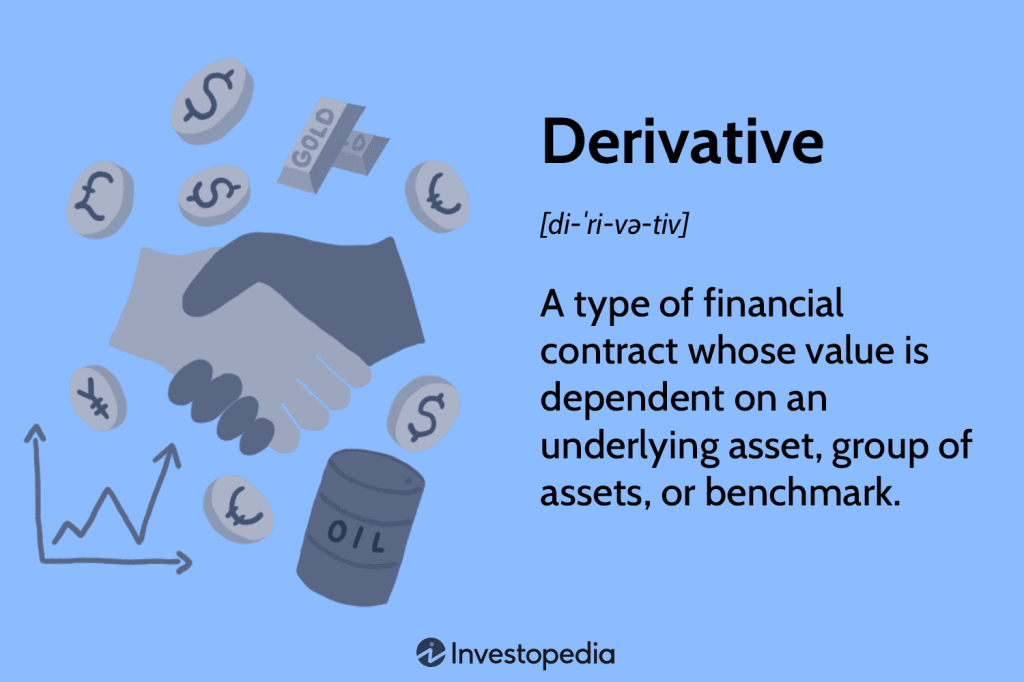
In finance  a derivative is a financial instrument or contract that derives its value from an underlying asset. The underlying asset can be a stock, bond, commodity, currency, interest rate, or even an index.


Derivatives are used for various purposes, including hedging against risks, speculating on price movements, or gaining exposure to an asset without owning it directly. The value of a derivative is derived from the fluctuations in the price of the underlying asset.


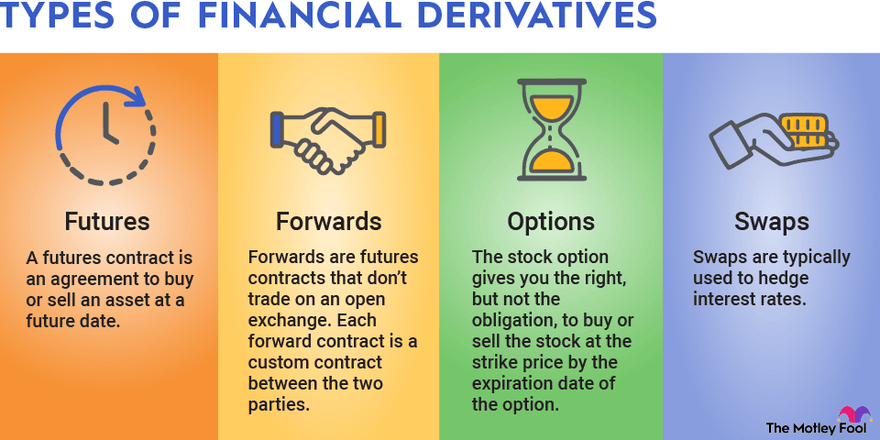
Common types of derivatives include options, futures contracts, forwards, and swaps. Here’s a brief explanation of each:

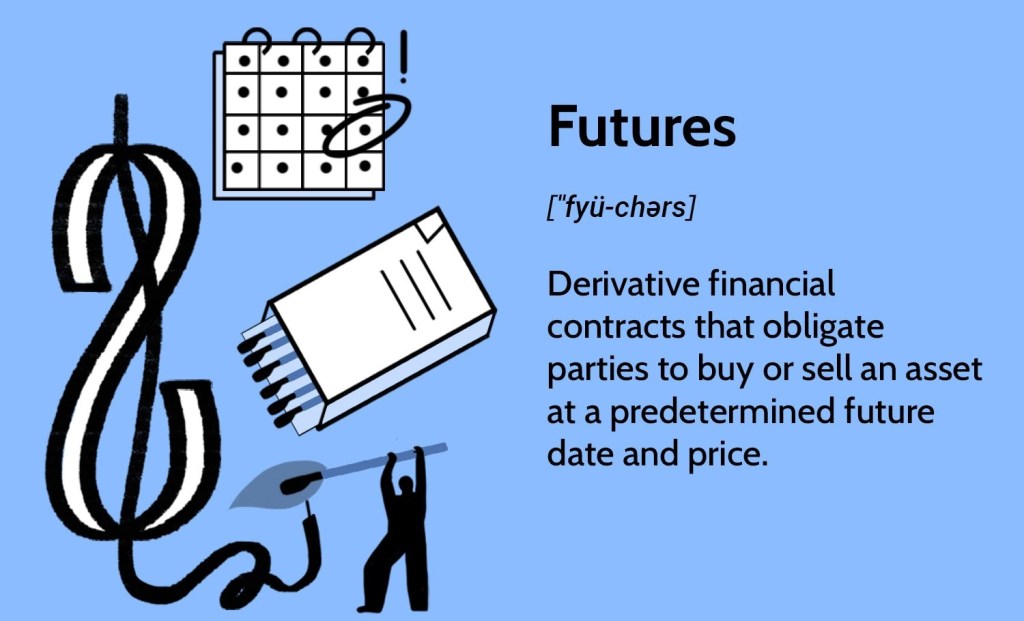
1:Futures Contracts: A futures contract is an agreement to buy or sell an asset at a predetermined price on a specified future date. It obligates both parties to fulfill the contract at the agreed-upon terms.

Here’s an example of a derivatives future:

Let’s say you are a wheat farmer and you’re concerned about the future price of wheat. To protect yourself against potential losses due to a decrease in wheat prices, you decide to enter into a futures contract.

You enter into a wheat futures contract with a delivery date three months from now. The contract specifies that you will sell 1,000 bushels of wheat at a price of $5 per bushel at the end of the three-month period.

At the time of entering into the futures contract, the current market price of wheat is $6 per bushel. By entering into this futures contract, you are essentially locking in a selling price of $5 per bushel, regardless of whether the market price of wheat goes up or down in the next three months.

Now, let’s consider two scenarios:

Scenario 1: At the end of the three-month period, the market price of wheat has dropped to $4 per bushel. In this case, you would have made a wise decision to enter into the futures contract because you are still able to sell your 1,000 bushels of wheat at the agreed price of $5 per bushel. You would avoid the loss of selling at the lower market price of $4 per bushel, and the futures contract would have helped protect your profits.

Scenario 2: At the end of the three-month period, the market price of wheat has increased to $7 per bushel. In this case, you would not be able to take advantage of the higher market price because you are obligated to sell your 1,000 bushels of wheat at the lower agreed price of $5 per bushel. However, you would not incur a loss since the futures contract protected you from selling at an even lower market price.

By participating in a wheat futures contract, you are effectively hedging against potential price fluctuations, minimizing your risk exposure, and ensuring a certain level of price certainty for your wheat produce. Futures contracts are widely used in commodities trading to manage price risk and provide stability for producers, consumers, and investors alike.


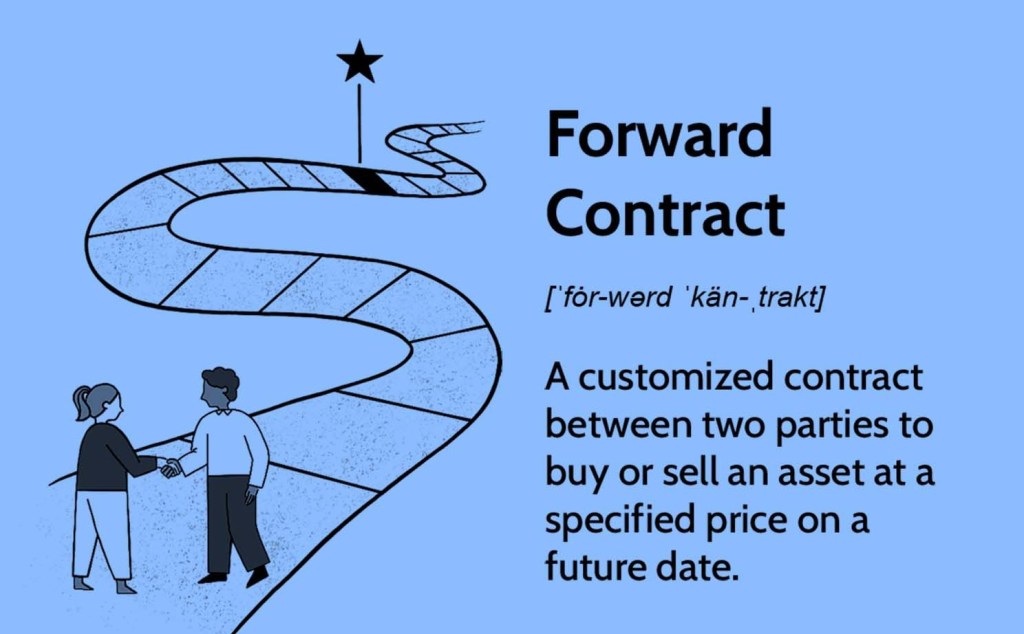
2:Forwards: Similar to futures contracts, forwards are agreements to buy or sell an asset at a predetermined price on a specified future date. However, forwards are typically customized contracts between two parties, whereas futures contracts are standardized and traded on exchanges.

Here’s an example of a derivative forward contract:

Let’s say you are a farmer and you expect to harvest 1,000 bushels of corn in three months. You are concerned about the fluctuating price of corn in the market and want to protect yourself against potential price decreases. To hedge your risk, you enter into a derivative forward contract with a corn buyer.

In the contract, you agree to sell 1,000 bushels of corn to the buyer in three months at a predetermined price of $5 per bushel. This means that regardless of the actual market price of corn at the time of the delivery, you are obligated to sell your corn at $5 per bushel.

If the market price of corn increases to $6 per bushel by the time of delivery, you will still sell your corn at $5 per bushel as per the contract. In this case, you would have benefited from the derivative forward contract because you locked in a higher price.

On the other hand, if the market price of corn decreases to $4 per bushel by the time of delivery, you would still sell your corn at $5 per bushel. In this scenario, the derivative forward contract would have protected you from potential losses.

Derivative forward contracts allow individuals or businesses to mitigate their exposure to price fluctuations by agreeing to buy or sell an asset at a predetermined price in the future.

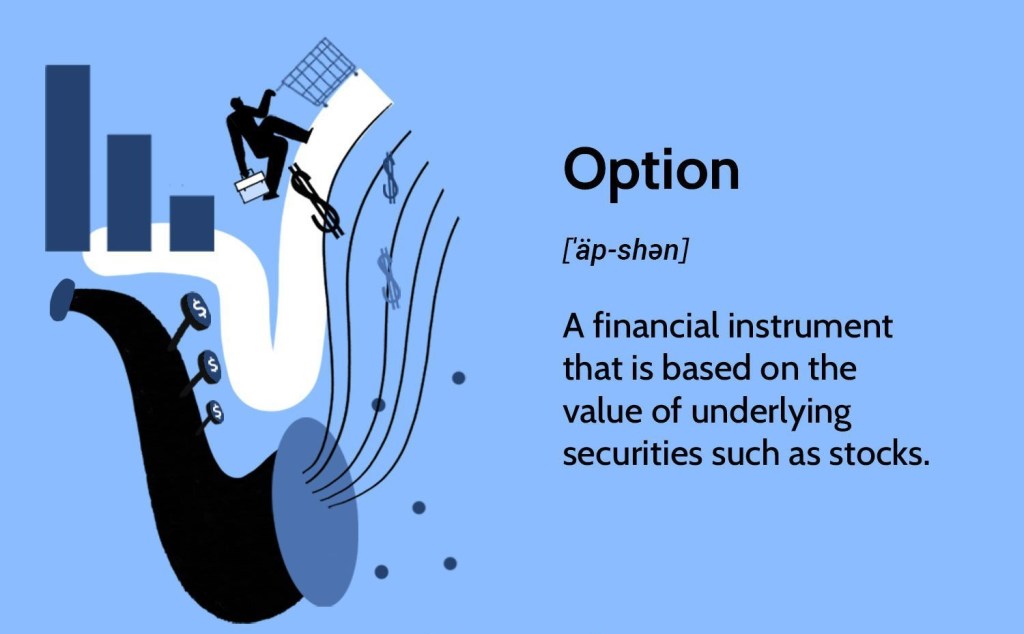
3:Options: An option gives the holder the right, but not the obligation, to buy (call option) or sell (put option) an underlying asset at a predetermined price within a specific time frame.

For example


Let’s consider a fictional scenario involving derivatives options.

Suppose you are an investor who holds 100 shares of a technology company called XYZ Inc. The current market price of each share is $50. However, you are concerned that the stock price might decline in the next three months due to some uncertainties in the market.

To protect yourself from potential losses, you decide to purchase a put option on XYZ Inc. stock. A put option gives you the right, but not the obligation, to sell the underlying asset (in this case, the XYZ Inc. stock) at a predetermined price, known as the strike price, within a specified time frame.

You find a put option contract for XYZ Inc. with a strike price of $45 and an expiration date three months from now. The premium (price) for this option contract is $3 per share.

By buying this put option, you are essentially paying $3 per share to have the right to sell your XYZ Inc. stock at $45 per share within the next three months, regardless of its actual market price at that time.

Here’s how the scenario can play out based on different stock price movements:

If the stock price of XYZ Inc. drops below $45 within the next three months: In this case, you can exercise your put option and sell your 100 shares of XYZ Inc. stock at the higher strike price of $45 per share. This allows you to limit your losses, as you are selling the stock at a higher price than the current market price.

If the stock price of XYZ Inc. remains above $45 within the next three months: In this situation, you don’t need to exercise your put option since it wouldn’t be beneficial. You would simply let the option expire, and your loss would be limited to the premium paid for the put option ($3 per share), which acted as insurance against a potential decline in the stock price.

By purchasing the put option, you have effectively created a safeguard against potential losses in the value of your stock holdings. If the stock price goes down, the put option becomes more valuable, and you can use it to protect your investment.

Keep in mind that this is a simplified example, and there are various factors, such as time decay, volatility, and market conditions, that can affect the pricing and profitability of options contracts. It’s important to thoroughly understand the risks and mechanics of derivatives options before engaging in options trading.


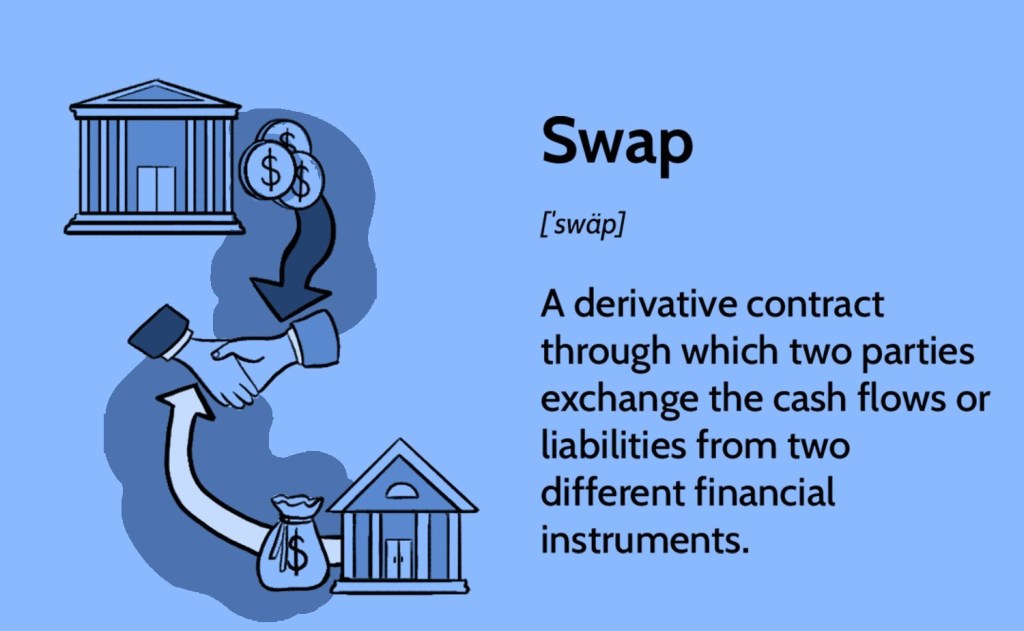
4:Swaps: Swaps involve the exchange of cash flows or financial instruments between two parties. The most common type is an interest rate swap, where parties exchange fixed and floating interest rate payments.

Here are some examples of swap derivatives:

1:Interest Rate Swap: In an interest rate swap, two parties agree to exchange interest payments on a specified notional principal amount. For example, one party may agree to pay a fixed interest rate while receiving a floating interest rate based on a reference rate such as LIBOR (London Interbank Offered Rate).

2:Currency Swap: A currency swap involves the exchange of principal and interest payments denominated in different currencies. This allows participants to manage currency risk and obtain funding in a different currency. For instance, a company based in the United States might enter into a currency swap with a European company to obtain euros for a specific period.

3:Credit Default Swap (CDS): A credit default swap is a contract in which one party pays periodic premiums to another party in exchange for protection against the default of a particular debt instrument or reference entity. If a default occurs, the protection seller compensates the protection buyer for the loss incurred.

4:Equity Swap: An equity swap involves the exchange of future cash flows based on the performance of an underlying stock or equity index. It allows investors to gain exposure to the price movements of a particular stock or index without actually owning the underlying asset.

Derivatives can be complex and carry risks. They require an understanding of the underlying asset, market conditions, and the potential for significant gains or losses. As such, they are primarily used by investors, traders, financial institutions, and corporations with specific risk management needs.

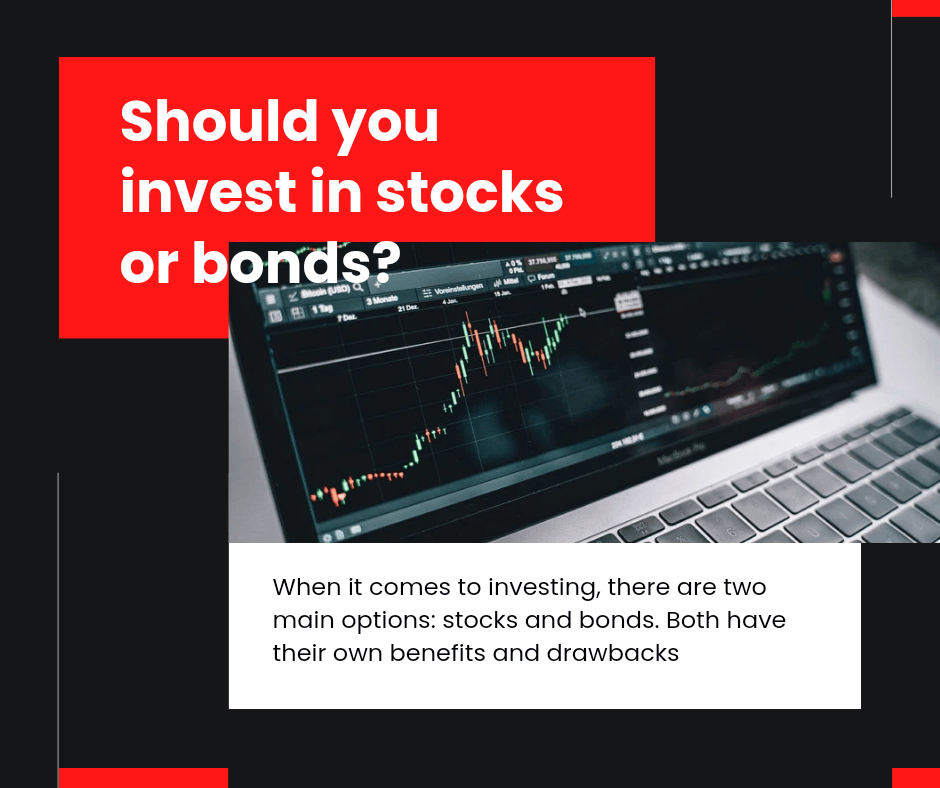
Should we invest in stocks or bonds?

A bond is a financial instrument that represents a debt obligation. It is essentially a loan made by an investor, such as an individual or an institution, to a borrower, typically a government, municipality, or corporation. When an entity issues a bond, it is borrowing money from the bondholder for a fixed period of time, during which it agrees to pay periodic interest payments, known as coupon payments, to the bondholder. At the end of the bond’s term, called its maturity date, the borrower repays the principal amount, known as the face value or par value, to the bondholder.

Bonds are considered fixed-income securities because they provide a predetermined stream of income through the periodic interest payments. The interest rate, or coupon rate, is typically fixed when the bond is issued, although there are also floating-rate bonds whose interest rates adjust periodically based on a reference rate.

Bonds are commonly used by governments and corporations to finance projects, infrastructure development, or other capital expenditures. They are also popular among investors because they are generally considered safer investments compared to stocks. The creditworthiness of the issuer, as assessed by credit rating agencies, plays a crucial role in determining the interest rate offered on the bond. Higher-rated bonds typically have lower interest rates because they are considered less risky, while lower-rated bonds carry higher interest rates to compensate for the increased risk.

Bonds can be bought and sold in the secondary market, allowing investors to trade them before their maturity date. The price of a bond in the secondary market can fluctuate based on changes in interest rates, credit ratings, and market demand for the bond.

There are several types of bonds, each with its own characteristics and features. Here are some common types:

1:Treasury Bonds: These are bonds issued by the government of a country, typically with longer maturities ranging from 10 to 30 years. They are considered to be low-risk investments since they are backed by the full faith and credit of the government.

2:Corporate Bonds: These bonds are issued by corporations to raise capital for various purposes such as expansion, acquisitions, or debt refinancing. Corporate bonds offer higher interest rates compared to government bonds to compensate for the additional risk associated with the issuing company.

3:Municipal Bonds: Municipal bonds, also known as munis, are issued by state or local governments, municipalities, or government agencies to fund public projects like schools, highways, or utilities. The interest earned from municipal bonds is often exempt from federal income tax and, in some cases, state and local taxes, making them attractive to investors in higher tax brackets.

4:Agency Bonds: These bonds are issued by government-sponsored enterprises (GSEs) such as Fannie Mae and Freddie Mac in the United States. They are not directly backed by the government but are considered to have a lower risk of default due to implied government support.

5:Zero-Coupon Bonds: Zero-coupon bonds do not pay periodic interest payments like traditional bonds. Instead, they are sold at a discount to their face value and mature at par, allowing investors to earn a return through the price appreciation over time. The difference between the purchase price and the face value represents the interest earned.

6:Convertible Bonds: Convertible bonds give bondholders the option to convert their bonds into a predetermined number of the issuer’s common stock at a specified conversion ratio. These bonds offer investors the potential for capital appreciation if the issuer’s stock price rises.

7:Floating-Rate Bonds: Unlike fixed-rate bonds, floating-rate bonds have interest rates that adjust periodically based on a reference rate, such as the London Interbank Offered Rate (LIBOR) or the U.S. Treasury bill rate. This feature helps protect investors from interest rate fluctuations.

8:High-Yield Bonds: Also known as junk bonds, these bonds are issued by companies with lower credit ratings, indicating a higher risk of default. To compensate for the increased risk, high-yield bonds offer higher interest rates compared to investment-grade bonds.

Ultimately, the decision to invest in bonds should be based on your individual financial situation, risk tolerance, and investment objectives. It’s important to carefully evaluate the specific bonds you are considering, including their credit ratings, yields, maturity dates, and the overall economic and interest rate environment. Working with a financial advisor can provide personalized guidance based on your circumstances.


ML & AML

MONEY LAUNDERING –

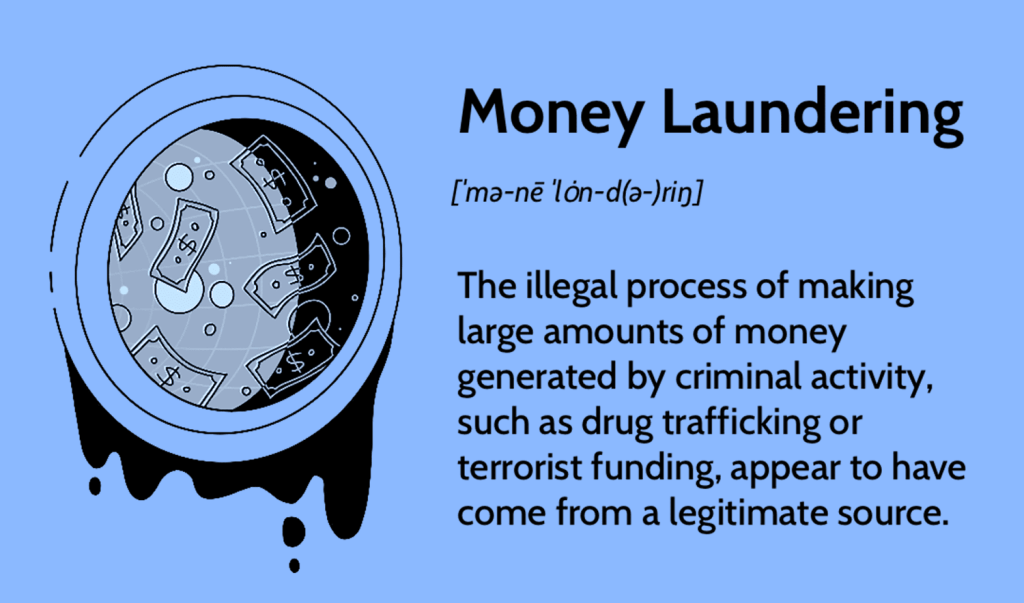
Money laundering refers to the process of making illegally obtained or “dirty” money appear legitimate or “clean” by passing it through a complex series of transactions or financial activities. The term “money laundering” originated from the idea of making illicit proceeds, such as those from drug trafficking or corruption, seem like they came from legal sources.


The main purpose of money laundering is to disguise the origins of the funds, making it difficult for law enforcement agencies to trace the money back to its illegal source. This allows individuals or criminal organizations to integrate illicit funds into the legitimate economy, enabling them to enjoy the profits without arousing suspicion.

Money laundering typically involves three stages:

Placement: The process begins with the placement stage, where the illicit funds are introduced into the financial system. This can be done through various means, such as depositing cash into bank accounts, purchasing assets like property or businesses, or using the funds for gambling.

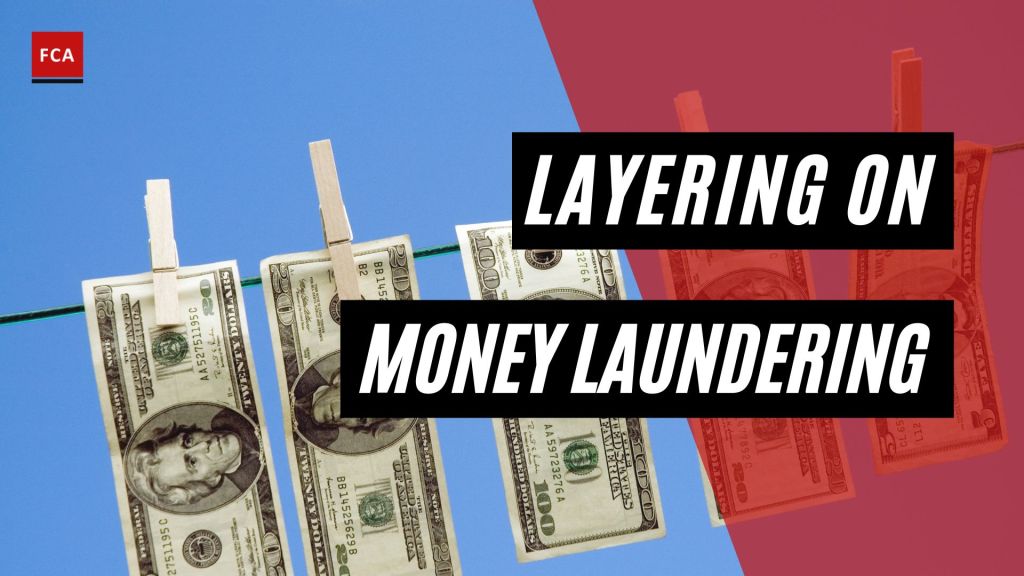
Layering: In this stage, the launderer engages in multiple complex transactions to obscure the trail of the illicit funds. They may transfer money between various accounts, conduct numerous financial transactions, or move funds across different countries or financial institutions. Layering aims to create a web of transactions that makes it challenging for authorities to trace the original source of the money.

Integration: The final stage involves integrating the laundered funds back into the legitimate economy. At this point, the money appears to have originated from legal activities. The launderer can use the funds for personal expenses, invest in legal businesses or assets, or simply merge the money with legitimate funds in a way that makes it difficult to differentiate between clean and dirty money.


ANTI MONEY LAUNDERING –

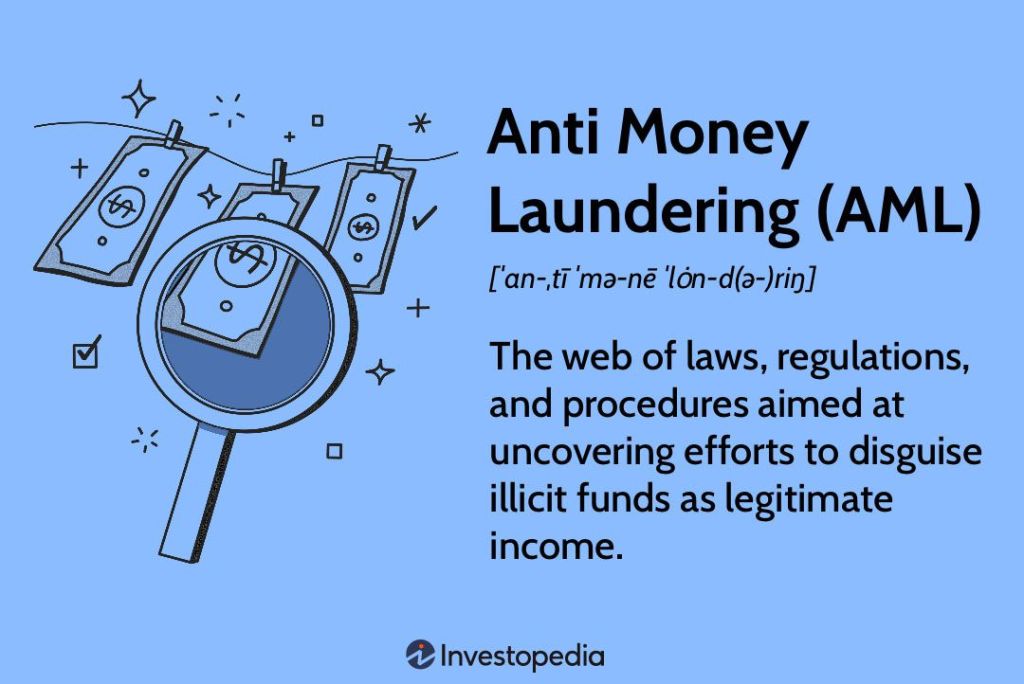
Anti-money laundering (AML) refers to a set of laws, regulations, and procedures designed to prevent the illegal generation, movement, and utilization of funds obtained through criminal activities. The primary objective of AML measures is to detect and deter money laundering, which involves disguising the origins of illicitly obtained money and integrating it into the legitimate financial system.

AML measures typically involve the following key elements:

1:Customer Due Diligence (CDD): Financial institutions are required to verify the identity of their customers and assess the risks associated with their transactions.

2:Know Your Customer (KYC): Institutions gather relevant information about their customers, such as identification documents, to establish their identity and evaluate their risk profile.

3:Transaction Monitoring: Financial institutions use automated systems to monitor customer transactions for any suspicious or unusual activities that may warrant further investigation.

4:Suspicious Activity Reporting (SAR): If financial institutions identify any suspicious transactions, they are obligated to report them to the appropriate authorities, such as financial intelligence units, who then investigate the matter.

5:Compliance Programs: Institutions establish comprehensive AML compliance programs to ensure adherence to regulations and provide training to employees.

6:Regulatory Oversight: Governments and regulatory bodies supervise financial institutions and enforce AML regulations to ensure compliance and deter money laundering activities.

AML laws and regulations vary between jurisdictions but are often based on international standards and guidelines established by organizations such as the Financial Action Task Force (FATF). Non-compliance with AML regulations can result in severe penalties for financial institutions, including fines, loss of license, and reputational damage.

By implementing AML measures, countries aim to combat money laundering, disrupt criminal networks, safeguard the integrity of the financial system, and deter illicit activities such as terrorism financing, drug trafficking, corruption, and organized crime

Design a site like this with WordPress.com
Get started